Alex Zelenko · CC BY-SA 4.0
 Why visit
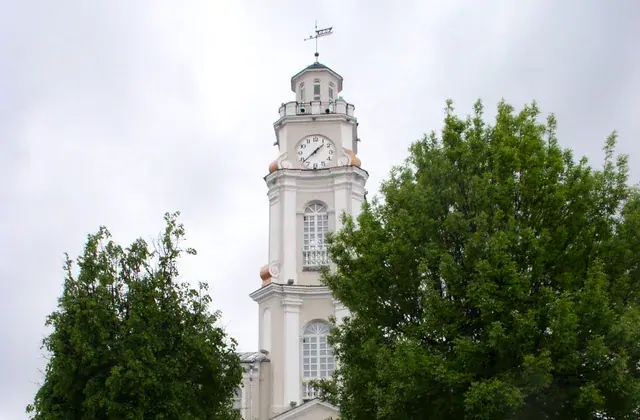
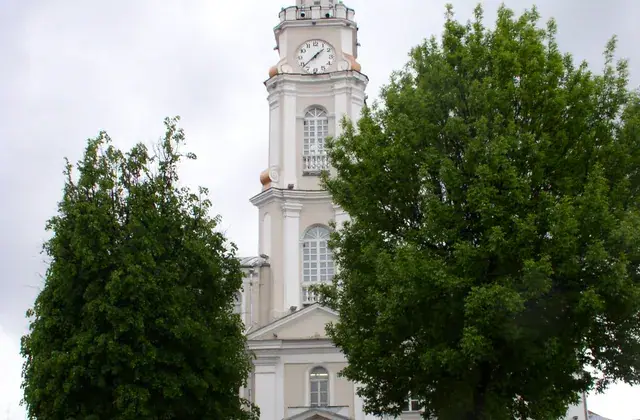
Saint Sophia Cathedral, Polotsk is worth including for its role as a landmark on the Western Dvina whose site reaches back to the eleventh-century cathedral of the Principality of Polotsk. The visit adds a concrete layer to an itinerary centred on Polotsk, because the architecture, collections or landscape can be understood in its actual regional setting rather than as an isolated name on a map. Its strongest points are Baroque towers; archaeological remains of earlier fabric; concert and museum spaces; river confluence views. Together these elements help explain how Belarusian history, belief, art, warfare or landscape developed in this part of the country, while giving the stop enough substance to stand on its own within a broader journey.
What you will see
- Baroque towers.
- archaeological remains of earlier fabric.
- concert and museum spaces.
- river confluence views.
History
The first cathedral was built in the eleventh century. After destruction and rebuilding, the present appearance largely reflects an eighteenth-century Baroque reconstruction.
Visitor tips
- 1
Allow time for the immediate historic or natural setting rather than treating the location only as a brief photo stop. Confirm local access conditions before departure.
About Vitebsk, Polotsk and the Northern Lakes
The north links Vitebsk’s art heritage with ancient Polotsk, the Western Dvina and the lake landscapes around Braslaw.
Open the Belarus guide