 Trougnouf (Benoit Brummer) · CC BY 4.0
 Why visit
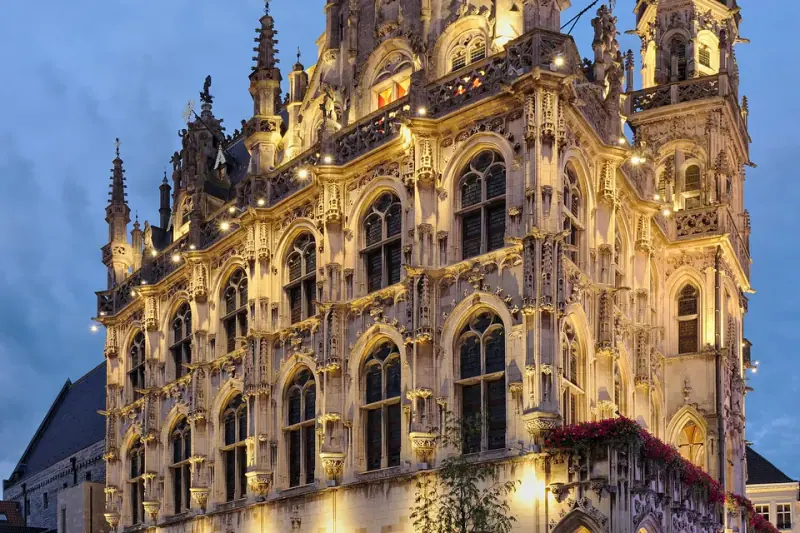
The richly carved late-Gothic town hall and its belfry reflect Oudenaarde's prosperity during the textile era, with civic rooms and collections linked to the town's tapestry tradition. The visit is worthwhile because it brings several strands of Belgian history and landscape together in one clearly legible setting. Time on site can focus on late-Gothic façade, belfry, civic interiors, while the surrounding streets, grounds or scenery provide useful context. It works especially well as part of a regional itinerary because the place adds a distinct subject rather than repeating the experience of nearby attractions.
What you will see
- late-Gothic façade.
- belfry.
- civic interiors.
- tapestry collections.
History
The town hall was built in the first half of the sixteenth century during a period of commercial prosperity. Its belfry forms part of the UNESCO serial listing shared by civic towers in Belgium and France.
Visitor tips
- 1
Allow enough time to understand the surrounding setting as well as the principal feature, and follow local signs where historic surfaces, protected areas or active public spaces affect access.
About East Flanders
East Flanders centres on Ghent's medieval trading landscape while extending to castles, civic monuments and smaller historic towns along the Scheldt and Leie.
Open the Belgium guide