Why visit
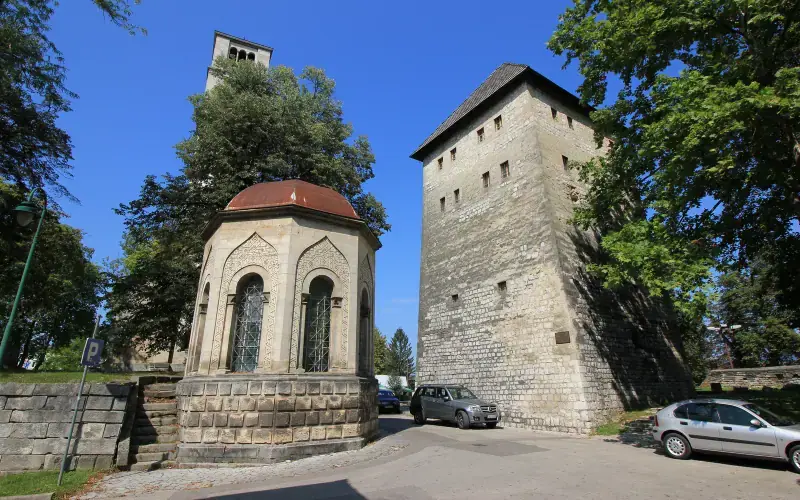
A relaxed city centre shaped by the clear Una River, with promenades, bridges, cafés and compact historic landmarks. Bihać developed at an important crossing and frontier position, passing through medieval, Ottoman, Habsburg and Yugoslav periods.
What you will see
- Una river promenade.
- Pedestrian centre.
- Historic riverside setting.
History
Bihać developed at an important crossing and frontier position, passing through medieval, Ottoman, Habsburg and Yugoslav periods. The place should be understood within Bosnia and Herzegovina’s layered history, where medieval states, Ottoman administration, Austro-Hungarian rule, Yugoslav development and the 1992–1995 war left different traces.
Visitor tips
- 1
Allow about 120 minutes for a normal visit, with extra time for photographs, queues, worship, interpretation or rest.
- 2
Carry small local-currency cash because minor parking, donations or rural services may not always accept cards.
- 3
Dress respectfully at active religious and memorial sites and avoid disrupting worship, funerals or commemorations.
- 4
Combine this stop with nearby places in the same region to reduce backtracking and parking searches.
- 5
Check local events and religious times because access and crowd levels can change without appearing in old travel listings.