 Cho2012 · CC BY-SA 4.0
 Why visit
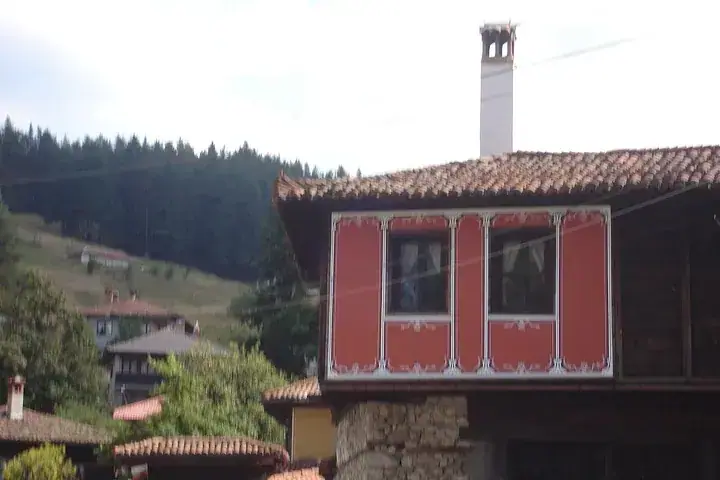
Koprivshtitsa combines architecture and political history more completely than a single museum can. The preserved houses show the domestic scale, craftsmanship and decorative taste of prosperous Bulgarian communities before independence, while several museums explain the revolutionary networks of the 19th century. Walking between them also reveals the town as a coherent historic landscape, with bridges, lanes and wooded slopes reinforcing the sense of a settlement shaped by its mountain location.
What you will see
- Colourful 19th-century Revival houses and enclosed courtyards.
- House museums connected with revolutionary and cultural figures.
- Cobbled streets, bridges and the compact mountain-town setting.
History
Koprivshtitsa grew as a prosperous craft and trading settlement during the Ottoman period. It became one of the principal centres of the April Uprising in 1876, and many historic houses later became museums or protected monuments.
Visitor tips
- 1
Confirm the current public entrance, trailhead, parking point or visitor route shortly before travel.
About Sofia and Western Bulgaria
The capital and western foothills combine late antique and medieval churches, national museums, modern civic architecture, Vitosha landscapes and National Revival heritage.
Open the Bulgaria guide