 Ymblanter · CC BY-SA 4.0
 Why visit
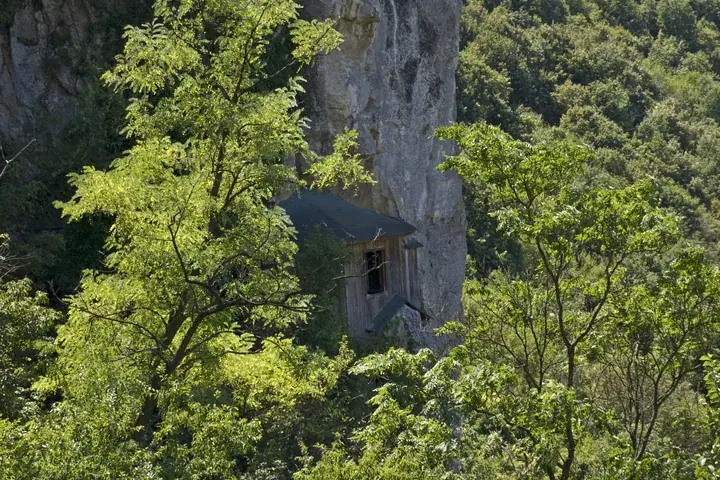
Ivanovo is important because architecture, painting and landscape are inseparable. Monks adapted natural caves and cliff faces into religious spaces rather than constructing a conventional monastery complex, and surviving frescoes connect the site with the artistic culture of medieval Tarnovo. The steep valley setting also explains the isolation sought by monastic communities. Compared with Tsarevets, the churches reveal a quieter religious dimension of the same broad historical period.
What you will see
- Rock-cut church interiors reached from the river valley.
- Medieval frescoes surviving on cave walls and ceilings.
- Views across the cliffs and woodland of the Rusenski Lom landscape.
History
Monastic communities developed the rock-hewn complex from the 13th century, when the region was connected with the rulers and religious life of the Second Bulgarian Empire. Important frescoes survive in several spaces. The site is UNESCO listed.
Visitor tips
- 1
Confirm the current public entrance, trailhead, parking point or visitor route shortly before travel.
About Danube and North-Central Bulgaria
The middle and lower Danube corridor includes medieval rock monasteries, wetland conservation, river-working traditions and museums or memorials connected with Bulgaria’s National Revival.
Open the Bulgaria guide