 Vislupus · CC BY-SA 4.0
 Why visit
Pliska is essential for understanding how the early Bulgarian state organised power on the ground. The scale of the fortified area is striking and differs from compact hilltop citadels such as Tsarevets. Palace remains, walls and the Great Basilica trace the transition from an early steppe-influenced ruling centre to a Christian monarchy. The open archaeological landscape also makes distance and spatial organisation part of the visit, rather than reducing the capital to a single reconstructed building.
What you will see
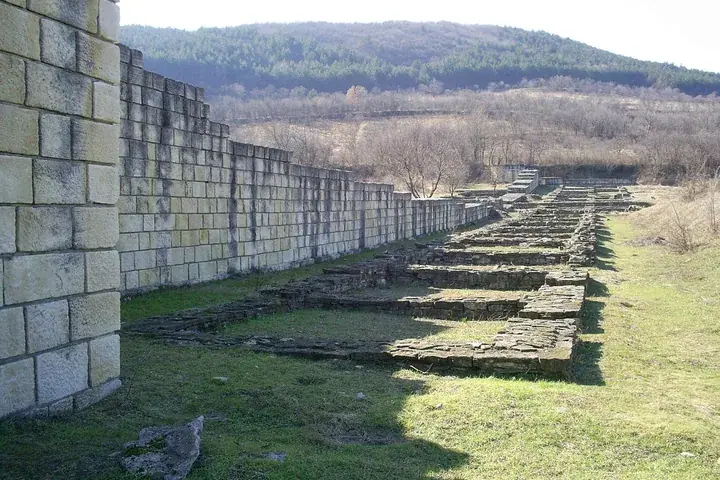
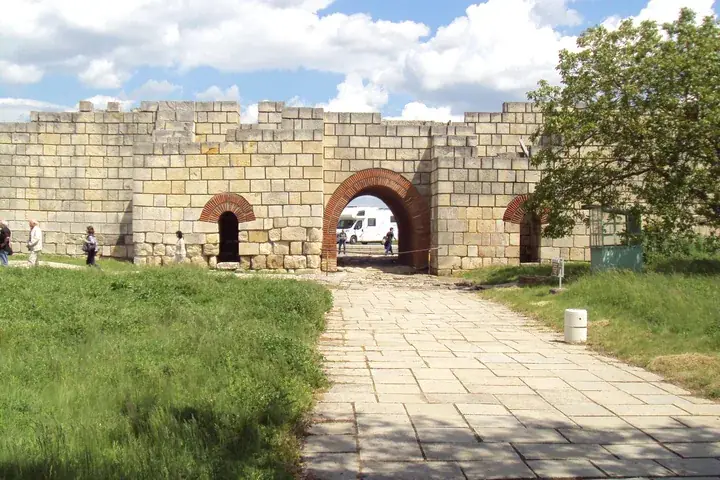
- The vast earthworks and stone defences of the early capital.
- Palace foundations and administrative structures.
- The Great Basilica and evidence for the Christianisation of Bulgaria.
History
Pliska served as the principal political centre of the early Bulgarian state from the late 7th century until the capital moved to Preslav in the late 9th century. The site includes palatial, defensive and Christian remains, notably the Great Basilica.
Visitor tips
- 1
Confirm the current public entrance, trailhead, parking point or visitor route shortly before travel.
About Northeast Bulgaria
The northeast contains major Roman archaeology, Thracian burial monuments and the first capitals of the Bulgarian state, with Pliska, Madara, Preslav and Shumen forming a concentrated historical landscape.
Open the Bulgaria guide