 dronepicr · CC BY
 Why visit
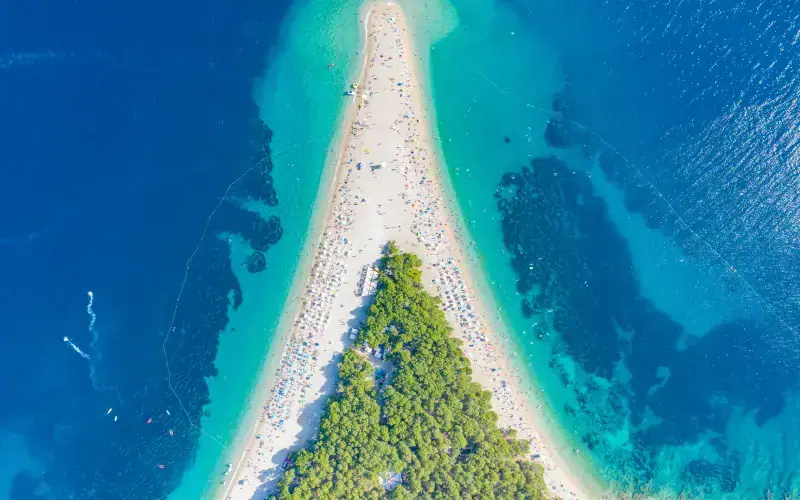
A distinctive pebble spit near Bol whose tip changes subtly with wind, waves and currents. The beach is a natural coastal formation that became one of Croatia’s most recognisable tourism images.
What you will see
- Changing pebble cape.
- Clear water.
- Views toward Hvar.
History
The beach is a natural coastal formation that became one of Croatia’s most recognisable tourism images. Croatia’s visitor story is layered: prehistoric and Roman settlement, medieval Croatian and communal institutions, Venetian, Habsburg and Ottoman frontiers, Yugoslav development and the 1990s war affected different regions in different ways.
Visitor tips
- 1
Allow about 180 minutes for the core visit and add extra time in July and August for heat, traffic, ferries, queues or limited parking.
- 2
Check the official same-week information for opening, restoration, worship, event, fire, weather or protected-area restrictions.
- 3
Carry water, sun protection and footwear suited to polished stone, pebble beaches, uneven ruins or karst paths as relevant.
- 4
Respect active worship, memorials, private homes, working salt pans, farms and protected wildlife areas.
- 5
Keep a flexible alternative nearby because bora wind, thunderstorms, rough sea and seasonal closures can disrupt a coastal or mountain day.
- 6
Check the wind and sea forecast and plan for limited shade, parking pressure and large summer crowds.
About Brač, Hvar and Vis Islands
Brač, Hvar and Vis Islands is organised as a practical trip-planning area with 12 researched places and realistic local bases.
Open the Croatia guide