 Marmuras · CC BY-SA 4.0
 Why visit
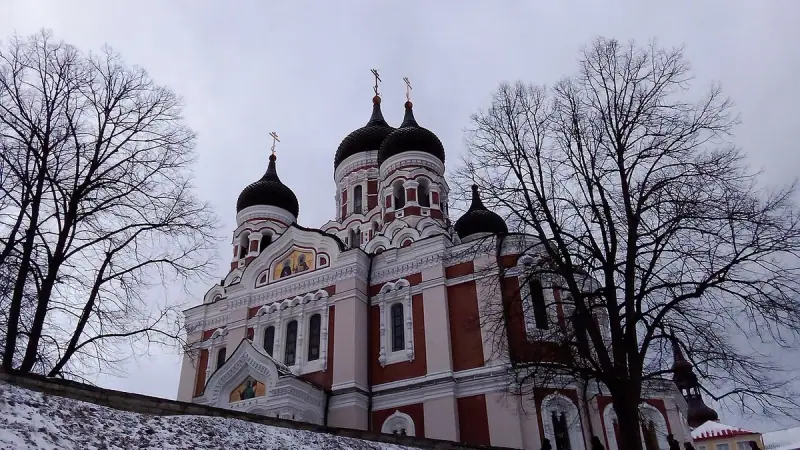
The cathedral is a strong visual counterpoint to Tallinn’s medieval and Lutheran architecture. Its late nineteenth-century Russian Revival design, icon-rich interior and bell ensemble place it in the political and cultural setting of Estonia under the Russian Empire. The location on Toompea also makes the building useful for understanding how religious, administrative and symbolic architecture share the same hill. Visitors can compare it directly with the nearby castle and the older streets leading down to the lower town.
What you will see
- onion-domed skyline.
- mosaic and decorated exterior.
- Orthodox iconostasis.
- Toompea setting beside the parliament.
History
The cathedral was built between 1894 and 1900 during the period when Estonia formed part of the Russian Empire. It was designed in a historicist Russian Orthodox style and remains an active cathedral.
Visitor tips
- 1
Allow enough time to explore the setting rather than only the principal feature, and follow local signs where routes, protected areas or historic surfaces limit access.
About Tallinn & Harju
Estonia’s capital region combines the medieval city, imperial Kadriorg, maritime museums and accessible northern-coast nature. Short journeys east and west of Tallinn add waterfalls and open-air heritage.
Open the Estonia guide