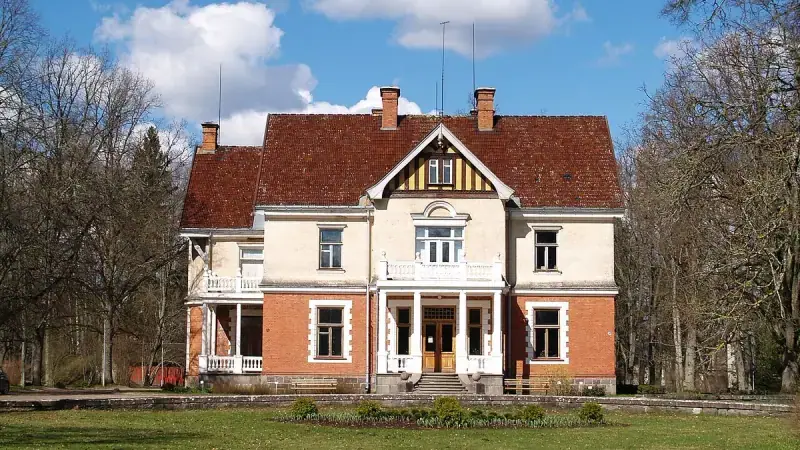
Otoomet · Public domain (PD-self)
 Why visit
Viljandi’s castle is rewarding because the ruins are embedded in a broad park-like landscape rather than confined to a single courtyard. Surviving walls, earthworks and terraces indicate the scale of the medieval fortress, while viewpoints open across the lake and surrounding slopes. The nearby suspension bridge and old town make the area easy to explore on foot. The site also provides a useful comparison with Rakvere and Narva: here the emphasis is on archaeological form and landscape after centuries of destruction rather than a functioning castle museum.
What you will see
- medieval wall fragments.
- castle hills and earthworks.
- suspension bridge.
- views over Viljandi Lake.
History
Construction of the stone stronghold began after the conquest of the area in the thirteenth century. The castle became an important centre of the Livonian Order and was heavily damaged during wars of the sixteenth and seventeenth centuries.
Visitor tips
- 1
Allow enough time to explore the setting rather than only the principal feature, and follow local signs where routes, protected areas or historic surfaces limit access.
About Viljandi & Järva
Central Estonia links castle hills and lake views in Viljandi with preserved manor estates and Paide’s strategic medieval centre.
Open the Estonia guide