 Bjørn Christian Tørrissen · CC BY-SA 3.0
 Why visit
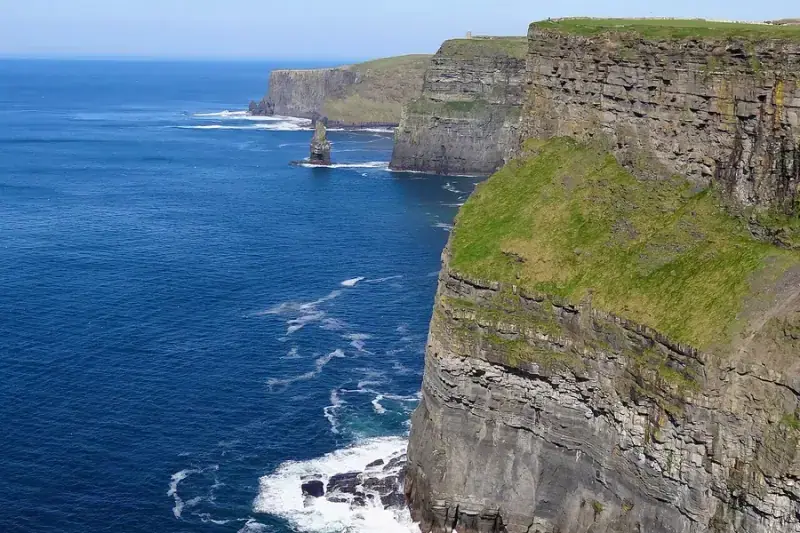
Cliffs of Moher is worth time because it is a long line of Atlantic sea cliffs formed from layered shale and sandstone on the western edge of County Clare. The visit centres on cliff-top paths, O’Brien’s Tower, and seabird colonies, so the place can be understood through visible features rather than reputation alone. The cliffs expose Carboniferous rock layers and have long served as a dramatic coastal landmark; O’Brien’s Tower was built in the nineteenth century. Within Clare & Limerick, it adds a clear coast, nature dimension to a broader itinerary. A measured visit leaves time to examine the building fabric, landscape or collections and to understand how the site relates to its immediate setting.
What you will see
- cliff-top paths.
- O’Brien’s Tower.
- seabird colonies.
History
The cliffs expose Carboniferous rock layers and have long served as a dramatic coastal landmark; O’Brien’s Tower was built in the nineteenth century.
Visitor tips
- 1
Allow enough time to examine cliff-top paths rather than treating the stop only as a quick photograph.
- 2
Check current official notices shortly before travel for temporary closures, conservation work or access changes.
About Clare & Limerick
The limestone Burren, Atlantic cliffs, caves, castles and Limerick’s museum collections provide a varied route through geology, archaeology and medieval history.
Open the Ireland guide