 N Chadwick · CC BY-SA 2.0
 Why visit
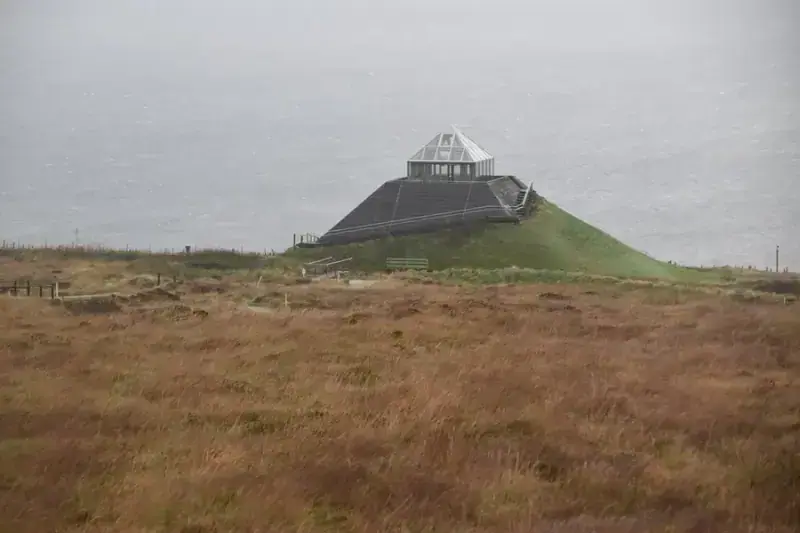
Céide Fields is worth time because it is a prehistoric landscape where Neolithic field walls and settlement traces were preserved beneath blanket bog. The visit centres on prehistoric field walls, visitor-centre interpretation, and north-coast cliffs, so the place can be understood through visible features rather than reputation alone. The buried field systems date to the Neolithic period and demonstrate organised farming in north Mayo thousands of years ago. Within Mayo, it adds a clear archaeology, prehistoric dimension to a broader itinerary. A measured visit leaves time to examine the building fabric, landscape or collections and to understand how the site relates to its immediate setting.
What you will see
- prehistoric field walls.
- visitor-centre interpretation.
- north-coast cliffs.
History
The buried field systems date to the Neolithic period and demonstrate organised farming in north Mayo thousands of years ago.
Visitor tips
- 1
Allow enough time to examine prehistoric field walls rather than treating the stop only as a quick photograph.
- 2
Check current official notices shortly before travel for temporary closures, conservation work or access changes.
About Mayo
Mayo’s Atlantic side centres on pilgrimage, prehistoric field systems and an eighteenth-century estate, with Clew Bay and the north-coast cliffs shaping the wider landscape.
Open the Ireland guide