
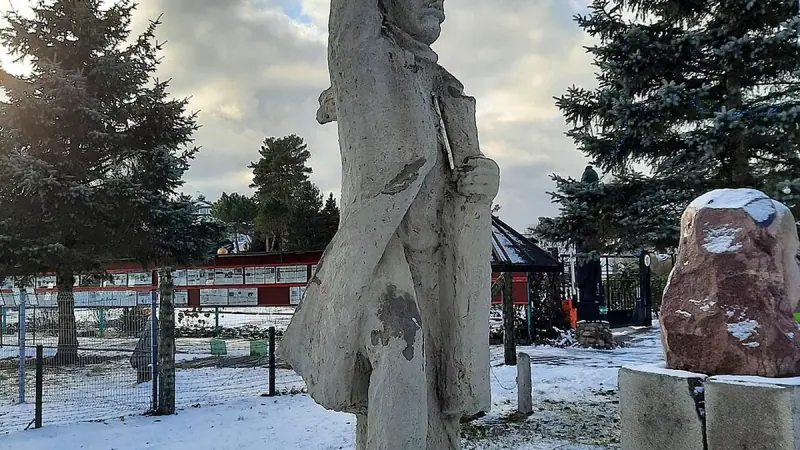
 Vilensija · CC BY-SA 4.0
 Why visit
Grūtas Park is worth time for its its material evidence of Soviet public symbolism and the opportunity to examine how monuments are recontextualised after political change. The visit combines relocated statues, propaganda objects, exhibition rooms and forest paths, making the site useful for understanding Lithuania’s Soviet occupation and debates over memory after independence. It rewards a slower look at the shift in meaning when monumental objects are removed from civic squares and placed in a museum setting and fits naturally with Druskininkai and Dzūkija forest landscapes. The experience is particularly relevant to travellers interested in twentieth-century history, political imagery and memory studies, while the setting gives the historical or natural story a clear physical context.
What you will see
- Relocated Soviet monuments.
- Historical and propaganda displays.
- Woodland museum route.
History
The park opened after Lithuania regained independence, bringing together many Soviet-era monuments removed from public spaces. Their display in a new setting has made the site part historical collection and part continuing debate about how societies handle authoritarian symbols.
Visitor tips
- 1
The subject and presentation can be politically and emotionally charged; historical context is important when interpreting the objects.
- 2
Check the named official source shortly before travel for temporary closures, maintenance or local access changes.
About Dzūkija
Southern Lithuania is defined by pine forests, river valleys, villages and protected habitats, with cultural sites around Druskininkai and Merkinė.
Open the Lithuania guide
