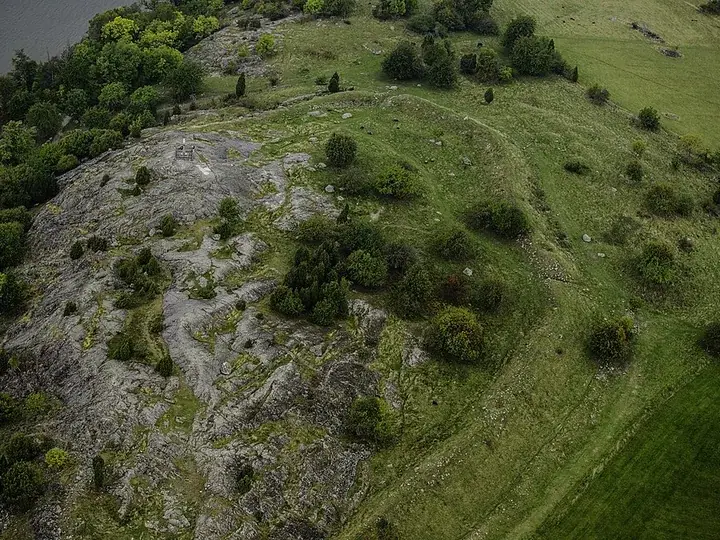
 Arild Vågen · CC BY-SA 4.0
 Why visit
Birka is valuable because the surviving landscape makes an early trading town legible without relying on a reconstructed urban centre. Burial fields, defensive earthworks and the former settlement area show how a community was organised beside Lake Mälaren, while archaeological finds demonstrate connections extending far beyond central Sweden. The island setting also explains why water routes mattered so much to commerce and communication. Time on site is best spent reading the terrain and museum interpretation together, since many of Birka’s most important remains survive as earthworks and archaeological layers rather than standing buildings.
What you will see
- the Black Earth settlement area.
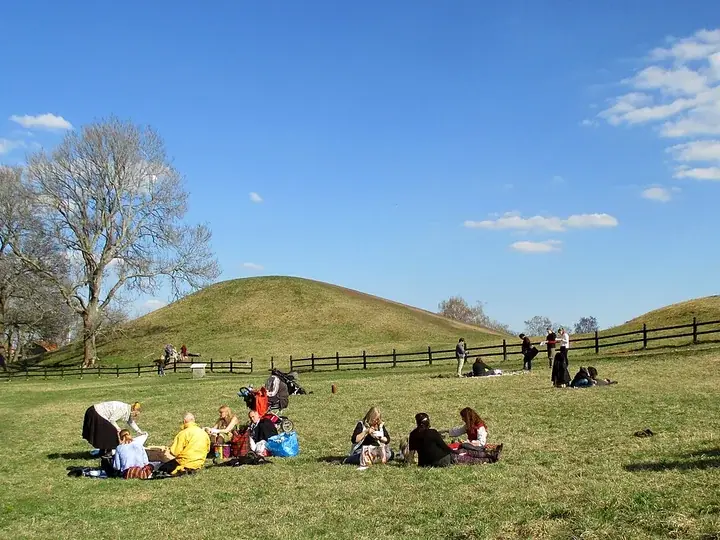
- large Viking-Age burial fields.
- Borg hillfort and defensive earthworks.
History
Birka developed as a trading settlement during the Viking Age, broadly from the 8th to the 10th century. Birka and the royal site of Hovgården were inscribed together on UNESCO’s World Heritage List in 1993.
Photographs
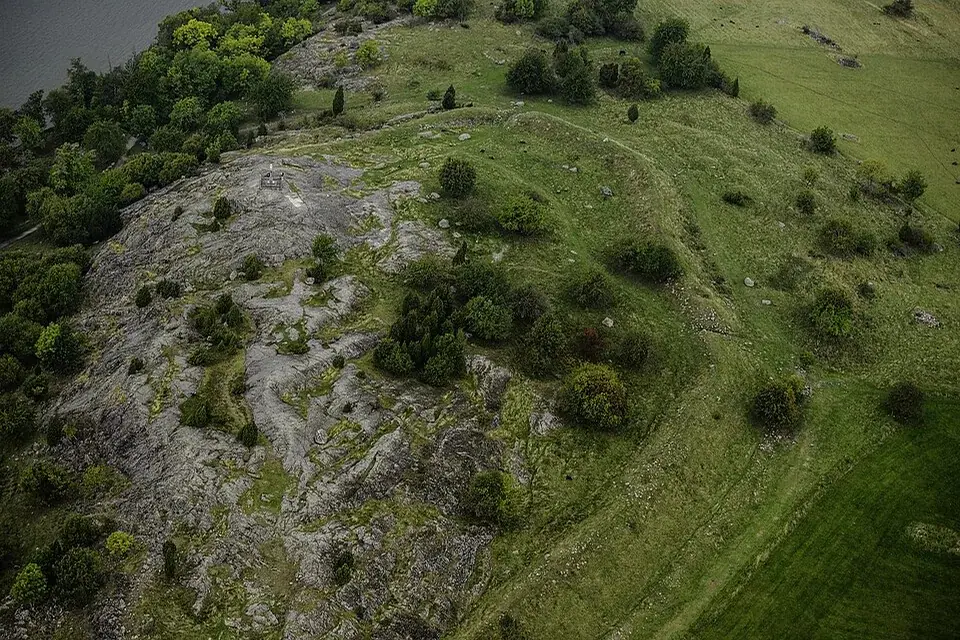
Arild Vågen · CC BY-SA 4.0 · full attribution on the image credits page.
Visitor tips
- 1
Check the official source shortly before travel for current access and visitor arrangements.
- 2
the Black Earth settlement area is a useful first reference point for understanding the site.
About Uppland
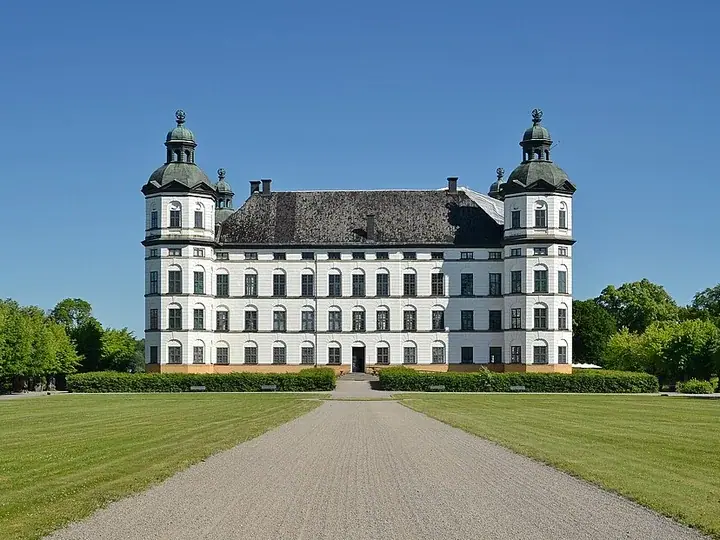
Uppland brings together Uppsala’s university and ecclesiastical heritage with early Swedish royal centres, Sigtuna and the great lakeside estate at Skokloster.
Open the Sweden guide